

Guest post by Vaughn Stoll, SVP and Director of Acquisitions for Brown & Brown.
As in 2025, economic and political uncertainty will continue to shape the M&A landscape in insurance and the broader marketplace in 2026. While some of the obstacles will change shape, many of the core issues remain the same:
- Fluctuating interest rates and economic volatility exacerbated by recent tariffs and the government shutdown
- Plateaued M&A valuations and ongoing private equity uncertainty is creating unease among buyers and sellers
- Rapidly evolving AI technologies are reshaping business operations and competitive advantage for enterprise businesses
Opportunities for M&A will remain in 2026, but navigating them will require strategic insight, adaptability and a long-term perspective.
1. Interest rates are expected to decline in 2026 — but aren’t likely to have a major impact on M&A activity.
Interest rates are still a factor going into 2026, but they are not as much of a concern as they were a year ago. Last year brought some relief, and rates are expected to continue to decline in 2026 — but the timing is uncertain.
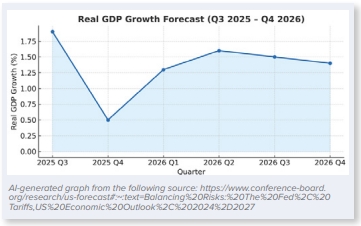
Both tariffs and a record-setting 43-day federal government shutdown ushered in a new level of instability in 2025. While initial fears of tariffs’ negative impact on the GDP have softened, the shutdown’s repercussions will affect Q4 GDP growth.
Q4 estimates are as low as .5% growth, but the economy will likely regain most of the ground lost during the shutdown in early 2026.
How will this affect M&A?
It’s unlikely that current interest rate changes will have an impact on M&A activity. Most buyers are more focused on metrics with a longer-term focus like 10-year treasuries and interest rate projections over several decades, not short-term interest rate fluctuations like the ones we’re currently seeing. The stunted GDP growth and slowing economy, though, may act as a driver to push potential sellers toward a deal so they can exit before valuations drop further.
2. Uncertainty fuels M&A activity across industries.
We’ve hit a plateau in M&A external valuations both within the insurance industry and across the broader M&A market. This slowdown mirrors what we’re seeing in sectors like healthcare, technology and government services, where elevated capital costs and economic turbulence are creating similar valuation ceilings.
Despite valuations being down, though, the momentum of global M&A activity has been building in 2025. There were two mega deals in 2025 with a clear price reduction, one of those being Brown & Brown’s biggest acquisition to date — the purchase of Accession Risk Management Group, Inc. for $9.8 billion.
The private equity sector, which holds investments totaling $3 trillion in 30,000 companies, is currently holding approximately $1 trillion in unsold assets. The tangled web of uncertainty is suppressing valuations and limiting viable exit opportunities, with the economic downturn, tariffs and geopolitical risks cited as the top three challenges faced by deal teams and operating partners this year. As a result, PE is contending with a backlog of aging and unsold assets that are delaying investor returns. Shareholder discomfort is growing as more questions arise about the timing and size of future distributions.
How will this affect M&A?
The soft insurance market is sparking downward pressure, as buyers won’t be able to count on a rising rate environment to generate return rates on their behalf. Next year will likely see lower sale prices than the past few years, but the returns are still outstanding compared to a decade ago. Even so, we expect more sellers to come to the table in 2026. Uncertainty fueled by overseas conflicts, the recent government shutdown, and a volatile economy will motivate many sellers to exit despite downward-trending prices. In fact, corporate mergers and acquisitions are forecast to increase 10% in 2025 and 3% in 2026, with PE transactions rising 8% in 2025 and 5% in 2026.
3. Artificial intelligence is here to stay, and it’s impacting mid-market businesses.
A year ago, the future of AI felt abstract. The thought was that the technology would develop and unfold over time, and concerns about an immediate impact on day-to-day business functions and operations were limited. Today, it is exceedingly clear that AI will disrupt every business and every teammate in one way or another.
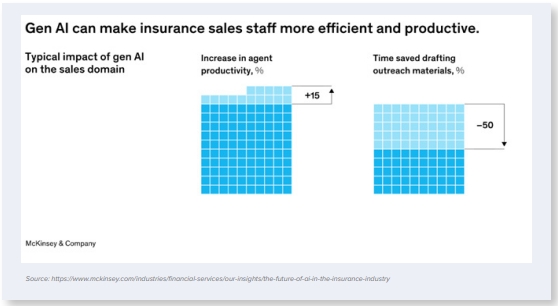
Insurance remains a relationship business, and AI is not going to replace that. But it will enable agents and brokers to be more efficient, and we’re likely to see the people who know how to use AI replace those who are unwilling to embrace it over the next several years. AI is a tool, and as it improves and sharpens its capabilities, it will help top brokers deliver even more effective, optimized solutions to their customers
How will this affect M&A?
OpenAI, a company whose products include ChatGPT and Copilot integrations, is preparing for an initial public offering (IPO) that could value the company at as much as $1 trillion, potentially making it one of the largest IPOs in history.
Insurers and brokers will likely pursue M&A to acquire AI talent and technology that can build differentiated, AI-native operations. Buyers will prioritize firms with strong AI/data science capabilities that can improve operations, risk and underwriting decision-making, and customer service experiences.
Uncertainty paves the way for opportunity in 2026
A challenging geopolitical climate, economic volatility and the rise of emerging technologies will drive more sellers into the market, creating a surge of potential opportunities. The consultants, investors and firms that can navigate complexity, identify enduring value and align with forward-looking trends are the ones positioned to capitalize on the market most effectively. Sustained success in 2026 and beyond will belong to those who combine insight, patience and strategic vision.
Interested in speaking with our Mergers & Acquisitions team? Email Jimmy Curcio or acquisitionsdept@bbins.com.
This material has been prepared for general informational purposes and is not intended to be applied to any reader’s particular circumstances.
© 2026 Copyright Arrowhead Programs. All Rights Reserved.